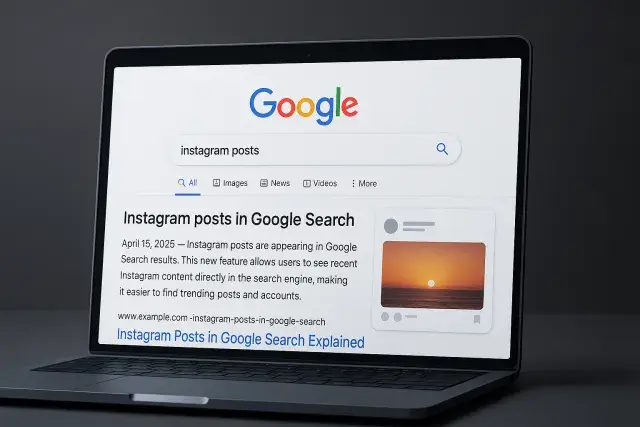
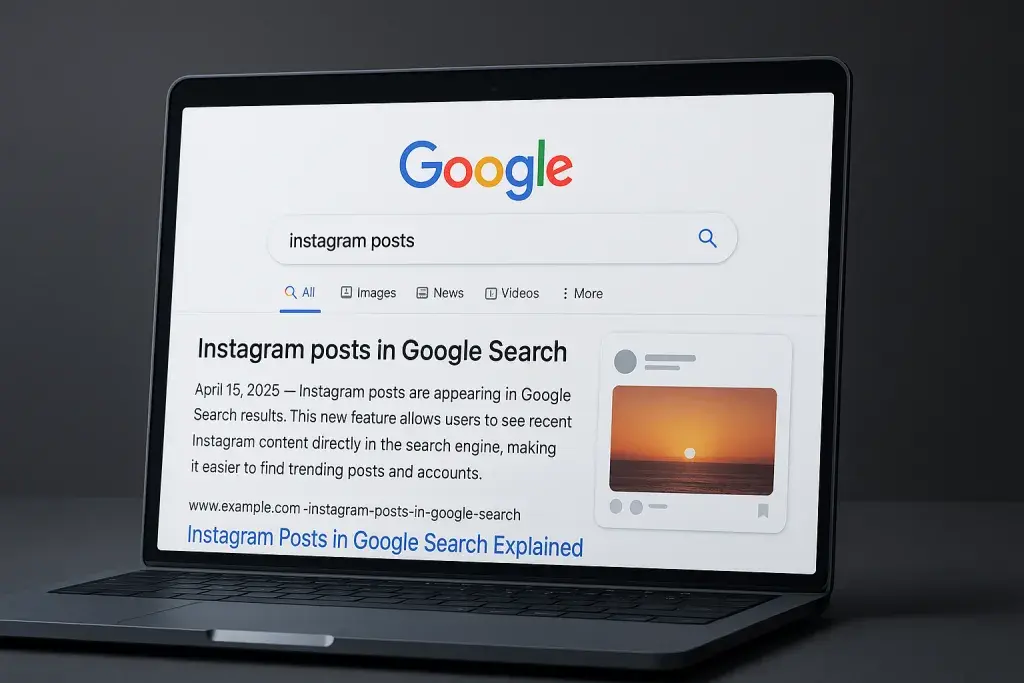
Type a brand name, a hashtag, or even a stranger's username into a browser bar, and there's a decent chance an actual Instagram post will surface right in the results - not a link to the app, but the post itself, complete with image and caption. That's not a glitch. It's a deliberate shift in how public social content gets surfaced to people who never opened Instagram in the first place.
This change isn't a footnote for social media managers to skim past. It rewires how visibility works for creators, small businesses, and anyone building an audience from scratch. A post that ranks well can reach someone who was never following the account, never saw a hashtag, and never scrolled past it in a feed. That's a different kind of discovery than anything Instagram's internal algorithm offers on its own. For accounts trying to compete in this space, credibility matters more than ever - a profile with thin engagement won't hold attention even if a post gets lucky and ranks. That's part of why some creators look at ways to boost my instagram numbers alongside content improvements, so a profile looks active and trustworthy the moment a curious visitor clicks through from an external result.
This piece breaks down how the indexing actually works, what's changed heading into 2026, and what you can do - practically, today - to put your content in front of people who are looking, even if they don't know your account exists yet.
What Does "Instagram Posts in Google Search" Actually Mean?
At its core, this is the practice of public Instagram posts being crawled and displayed within general web results, the same way a news article or blog post might appear. It's a separate system from the search bar inside Instagram itself, which relies on Instagram's own algorithm to match usernames, hashtags, and captions to what a user types inside the app.
When people ask for instagram posts in google search explained in simple terms, the distinction usually comes down to this: Instagram's internal search only shows results to people already using the app, filtered by their own behavior and network. External indexing works differently - it treats a public post more like a web page, assessing its content and metadata to decide whether it deserves a spot in results for a given phrase.
Not every post qualifies. Eligibility generally comes down to a handful of factors:
- The account must be public - private profiles are excluded entirely from this kind of indexing
- The post needs enough descriptive text (captions, alt text) to give crawlers something meaningful to work with
- The account should be active enough to be treated as a legitimate, ongoing source of content rather than a dormant page
A profile posting consistently with clear, descriptive captions has a far better shot at appearing than one relying purely on visuals with no text context. That single distinction shapes almost everything discussed in the sections ahead.
How Instagram Content Gets Indexed
Once a post meets the baseline requirements for eligibility, the next question is how it actually gets picked up, processed, and eventually shown to someone typing a phrase into a browser. This isn't instantaneous, and it isn't guaranteed - it depends on a handful of technical and behavioral factors working together.
Public vs. Private Account Visibility
Privacy settings act as a hard gate. A private account's posts are invisible to any external crawler, full stop. Switching an account from private to public doesn't retroactively index every old post immediately, either - it opens the door, but the content still needs to be crawled and processed before it can appear anywhere. Conversely, flipping a public account to private removes its content from future indexing and can cause previously visible posts to disappear from results over time.
Role of Hashtags, Captions, and Alt Text
Captions do more work than most users realize. A vague caption gives a crawler almost nothing to associate with the post. A specific, descriptive one - naming the subject, the context, or the purpose of the image - gives the system clear signals about what the post is actually about. Alt text, originally designed for accessibility, plays a similar role: it's often the clearest, most literal description of an image available, which makes it valuable for indexing purposes even though most users never see it. Hashtags still matter, but mainly as topical markers rather than the primary driver of ranking.
Crawling Frequency and Content Freshness
Accounts that post regularly tend to get revisited more often by crawlers than accounts that go quiet for weeks or months. This doesn't mean posting constantly guarantees faster indexing, but a stagnant account sends a weak signal that there's little new to check. Freshness matters less for evergreen content - a well-described post from months ago can still perform if the information in it stays relevant and accurate.
Instagram Posts in Google Search: 2026 Landscape
The feature has matured considerably, and the version available in 2026 looks noticeably different from its earlier, more limited form. What started as a narrow experiment covering a small slice of public accounts has expanded into something far more consistent and predictable.
What's New in the 2026 Rollout
The most notable shift in the instagram posts in google search 2026 rollout is broader geographic coverage - regions that previously saw little or no indexing of Instagram content now see it regularly. Account types once excluded, including certain business and creator profiles that were treated inconsistently in earlier versions, are now handled with more uniform rules. The practical effect is that more accounts, in more places, have a realistic chance of appearing in results than at any earlier point.
Recent Updates and Algorithm Changes
Staying current with each instagram posts in google search update matters because ranking factors shift, sometimes subtly, sometimes significantly. A caption strategy that worked reliably a year ago might carry less weight today if descriptive alt text has become a stronger signal in the meantime.
| Period | Update Description | Impact on Visibility | Who It Affects |
|---|---|---|---|
| Early rollout | Limited indexing of public posts in select regions | Narrow, inconsistent appearance in results | A small subset of public accounts |
| Expansion phase | Broader regional coverage and more account types included | Higher likelihood of posts appearing for relevant terms | Business and creator accounts globally |
| 2026 refinement | More consistent treatment of captions, alt text, and account activity | Ranking more closely tied to content quality and descriptiveness | Any public account posting regularly |
Staying Informed: Where to Track Instagram Posts in Google Search News
Because the rules around indexing and ranking keep shifting, treating this as a one-time setup is a mistake. Following instagram posts in google search news on an ongoing basis helps you catch changes before they quietly erode a strategy that used to work.
- Official announcements from the platforms directly involved, which typically explain the reasoning behind major changes
- Instagram's own communications about how public content is handled and indexed
- Independent publications that specialize in tracking changes to content discovery and ranking behavior
- Discussions among creators and small business owners who often notice practical shifts before they're formally announced anywhere
Checking in periodically, rather than obsessively, is usually enough. Sudden drops or spikes in outside traffic to a profile are often the first practical sign that something has changed.
Practical Tips to Optimize Your Instagram Posts for Google Visibility
Understanding the mechanics is only useful if it translates into habits you can actually apply to every post you publish. The following steps form a realistic, repeatable process rather than a one-off fix.
Writing Search-Friendly Captions and Alt Text
Write captions as if the reader has no visual context at all. Name the subject clearly, mention relevant details, and avoid vague phrasing that only makes sense to people already familiar with the account. Fill in alt text manually rather than relying on automatically generated descriptions, which tend to be generic and miss specific details that matter.
Using Hashtags Strategically
Hashtags still help with topical categorization, but piling on dozens of loosely related tags dilutes their usefulness. A handful of precise, relevant hashtags does more than a long list of generic ones.
Boosting Engagement Signals
Accounts with steady engagement - comments, shares, saves - tend to be treated as more established and trustworthy sources of content. Building that activity organically takes time, and for accounts just starting out, supplementing genuine growth efforts with reputable tools that strengthen follower counts and engagement can help a profile look credible enough to hold a visitor's attention once they arrive from an outside result.
- Switch the account to public or business status
- Write clear, descriptive captions for every post
- Add specific, manually written alt text
- Use a small number of relevant, precise hashtags
- Post consistently rather than in occasional bursts
- Monitor which posts attract outside traffic and refine the approach based on what works
Common Mistakes to Avoid
Some of the most common setbacks come from simple oversights rather than complicated technical issues. Recognizing them early saves time that would otherwise go into troubleshooting a problem that has an obvious cause.
- Keeping an account private while expecting it to appear in outside results
- Stuffing captions with irrelevant keywords instead of clear, natural descriptions
- Skipping alt text entirely, leaving crawlers with almost nothing to interpret
- Assuming Instagram visibility works exactly like ranking a website, when the signals involved are different
- Ignoring updates for months and only noticing a drop in visibility after the fact
Instagram Search Visibility vs. Traditional Instagram Discovery
External visibility is one channel among several, not a replacement for the discovery methods that already exist inside the platform. Understanding where each method fits helps decide how much attention to give each one.
| Discovery Method | Where Content Appears | Audience Type Reached | Level of Control | Best Use Case |
|---|---|---|---|---|
| External indexing | Browser results outside the app | People not already using Instagram or following the account | Moderate, based on captions and alt text | Reaching new audiences who search by topic |
| Explore feed | Inside the Instagram app | Active Instagram users with related interests | Low, driven by the platform's own algorithm | Growing reach among existing app users |
| Hashtag search | Inside the Instagram app | Users actively browsing a specific topic | Moderate, based on hashtag choice | Connecting with niche, topic-specific audiences |
| Direct profile visits | Inside the Instagram app | People who already know the account | High, dependent on existing brand recognition | Retaining and engaging an established audience |
Questions and Answers
Does every public Instagram post eventually appear in outside results?
No. Being public is a requirement, not a guarantee. Posts also need enough descriptive text and enough account activity to be considered worth surfacing, and even then, appearance for a specific phrase isn't certain.
If I delete a post, will it disappear from outside results right away?
Not necessarily instantly. There's usually a delay before removed or deleted content stops appearing, since it depends on the content being recrawled and the old version being dropped from the index.
Does switching my account to private permanently remove past visibility?
Switching to private stops future indexing and typically causes previously visible posts to drop out of results over time, though the timing can vary and isn't always immediate.
Is optimizing for outside visibility the same as growing followers inside the app?
No. They're related but distinct goals. Outside visibility brings in people who've never seen the account before, while in-app growth tactics like hashtags and Explore placement mainly reach people already active on the platform.
Should a small business prioritize this over regular Instagram growth tactics?
It shouldn't replace existing tactics, but it's worth treating as an additional channel. Writing better captions and alt text costs little extra effort and can pay off both inside and outside the app.
How quickly does a newly published post typically get indexed?
Timing varies and isn't fixed, since it depends on account activity, crawl frequency, and how the post is described. Consistent posting and clear descriptions tend to support faster, more reliable indexing over time.